
What Steel Thickness for a Laser or Plasma Cut Gate? A Practical Guide
CUTCRAFTDXF • FABRICATION GUIDE
What Steel Thickness for a Laser or Plasma Cut Gate?
A practical guide to sheet thickness, weight and detail for decorative gate panels
You have picked a gate design, the DXF file is ready, and now comes the question every fabricator asks: how thick should the sheet be? Too thin and the panel feels flimsy and may warp. Too thick and the gate becomes heavy, the fine details in the pattern get lost, and cutting costs go up.
This guide explains how to choose the sheet thickness for a laser or plasma cut gate panel, how heavy the panel will be, and how thickness affects the level of detail you can cut. Always confirm the final choice with your cutting shop, because their machine and settings matter too.
The short answer
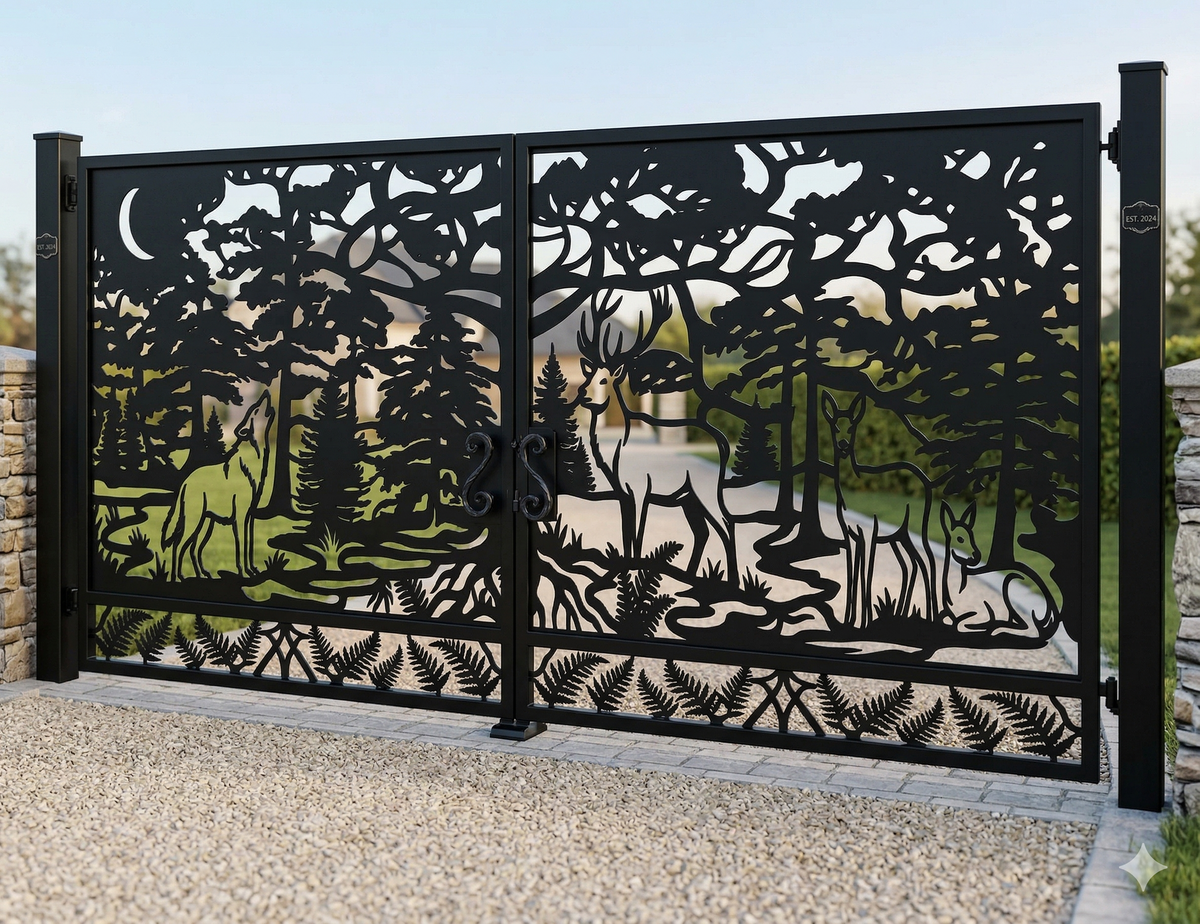
For decorative infill panels in driveway gates, garden gates and fence panels, 2 to 4 mm steel is the most common choice. The panel is usually welded or bolted into a rigid frame made of steel profiles, so the frame carries most of the load and the cut sheet works as the decorative and privacy layer.
| Thickness | Typical use | Notes |
|---|---|---|
| 1.5–2 mm | Indoor screens, wall art, small garden panels | Light and fine detail, but can flex and warp on large panels |
| 2–3 mm | Garden gates, wickets, fence panels, balustrades | Good balance of weight, rigidity and detail |
| 3–4 mm | Driveway swing and sliding gates | More rigid, heavier, details need to be a bit bolder |
| 5 mm and more | Heavy-duty or very large panels | Mostly plasma; check the weight against hinges, rollers and motor |
How heavy will the panel be?
Steel weighs about 7.85 kg per square metre for every millimetre of thickness. Aluminium is roughly a third of that, at about 2.7 kg per m² per mm. Corten steel weighs about the same as ordinary steel.
For a sliding gate, weight matters for the rollers and the motor. For a swing gate, it matters for the hinges and the posts. Wind also pushes harder on a closed panel than on an open pattern, so very dense designs on tall gates need a stronger frame.
Thickness and the level of detail
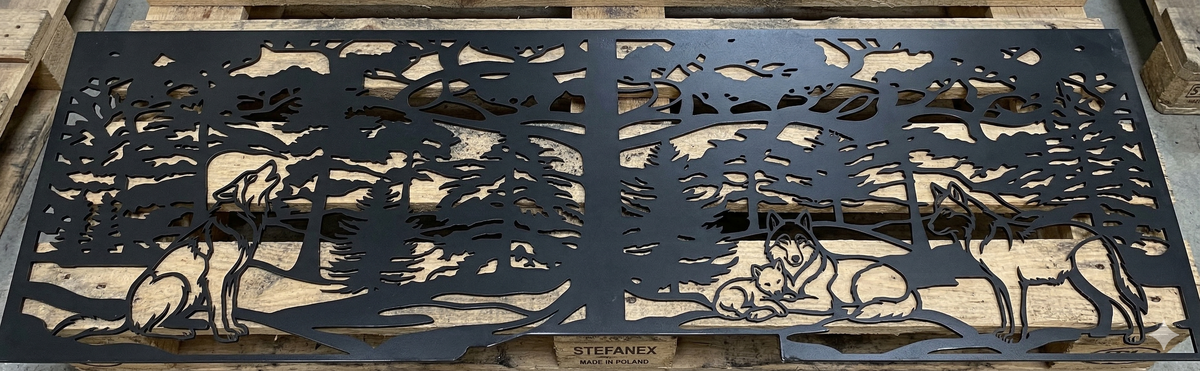
A simple rule many workshops use: the narrowest bridge or gap in the pattern should be at least as wide as the sheet is thick, and wider for plasma. Thin bridges overheat, burn away or bend after cutting.
Handles the finest details. Great for wildlife scenes with fur, branches and small stars.
Wider kerf and more heat. Choose bolder designs or slightly thicker bridges.
No heat distortion. Good for thick sheet and materials that must not warp.
If a design looks too detailed for your sheet, it can be scaled up, or the bridges can be thickened in the DXF. Want to compare the methods in more depth? Read our guide Laser, Plasma, or Waterjet?
Steel, corten or aluminium?
Most common and affordable. Galvanize and powder coat it for outdoor use.
Develops a stable rust-coloured surface. Popular for modern gardens and planters.
Much lighter and does not rust. A good option for large sliding gates and balconies.
FAQ
Is 2 mm steel enough for a driveway gate?
It can work for smaller leaves in a strong frame, but many fabricators prefer 3 mm for driveway gates because it stays flatter and feels more solid.
Do your DXF files work for any thickness?
Yes, the files are vector drawings and can be cut from different thicknesses. For thick sheet on plasma, check that the finest bridges are wide enough, or ask us to adapt the file.
Can you prepare the file for my exact sheet and frame?
Yes. We can resize the design, split it into panels that fit your sheets, add bend allowances and mounting holes. See custom DXF design.
Ready to cut your gate?
Browse ready-to-cut gate designs or send us your measurements for a file made to fit.
Browse gate designs → Custom DXF design