
Swing Gates vs. Sliding Gates: Pros, Cons, and Which Is Best for Your Property?
Your gate is more than an entry point — it's the first thing visitors and passersby notice about your property. It sets the tone for your home's curb appeal and dictates how you interact with your driveway every single day. The decision between a swing gate and a sliding gate depends on far more than personal taste — terrain, driveway length, climate, and design potential all play a role. Let's break down how each type works so you can choose with confidence.
Swing Gates

How Swing Gates Work
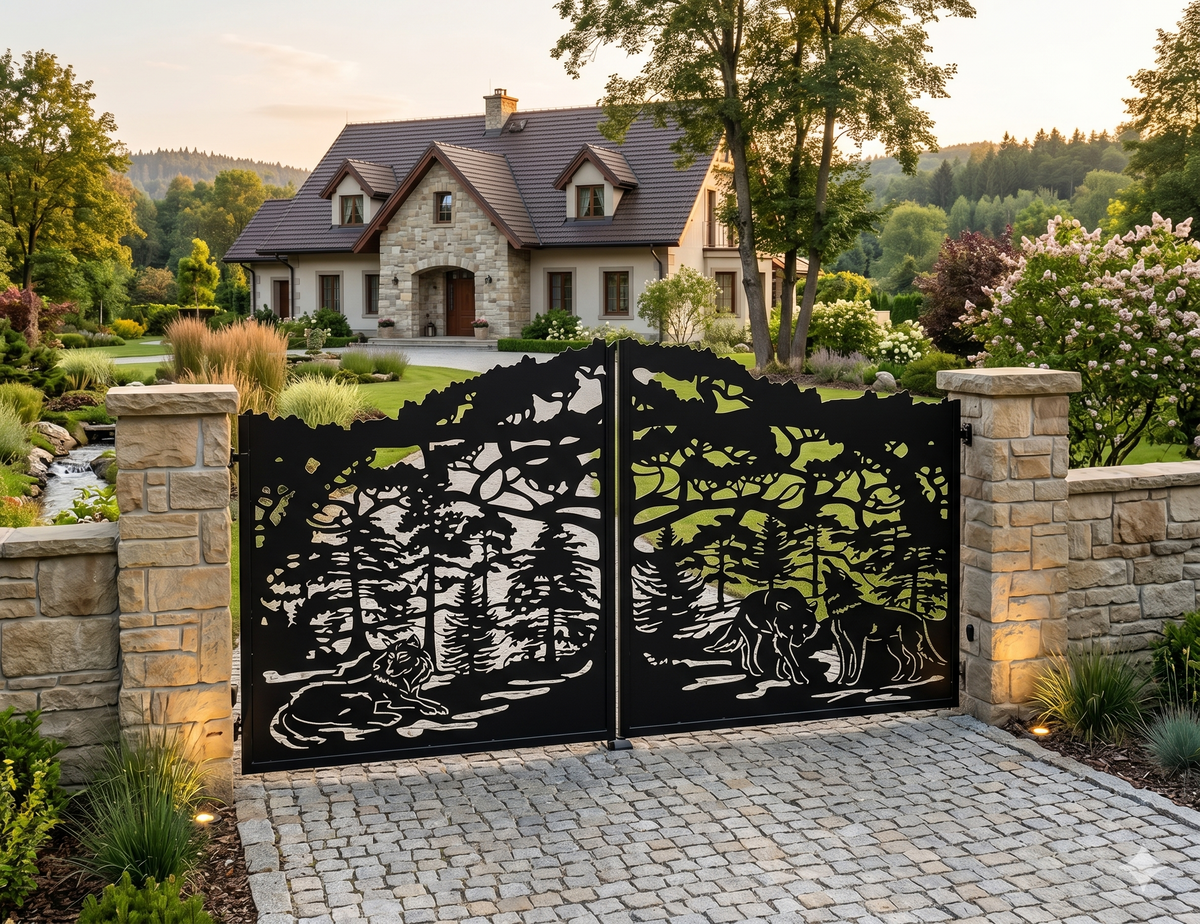
Swing gates operate on the same principle as a traditional door: one or two panels are mounted on hinges attached to gate posts and swing inward or outward to open. They can be manually operated or automated with hydraulic or articulated arms, and they come in single-leaf or double-leaf (bi-parting) configurations depending on the width of your driveway.
Advantages of Swing Gates
- Classic, elegant aesthetic — swing gates lend themselves beautifully to ornamental and estate-style designs.
- Lower mechanical complexity — fewer moving parts than a sliding track system, often meaning simpler long-term maintenance.
- Strong seal at the base — better suited to sites where ground-level security (pets, small children) is a priority.
- Ideal for flat, level driveways with enough clearance for the arc of the swing.
Space Requirements
The main limitation of a swing gate is the arc of clearance it needs, both inside and outside the property line. A single-leaf gate typically needs clearance equal to its full width to swing open without obstruction, and this space must remain free of parked cars, landscaping, or slopes. On sloped or uneven driveways, or properties with limited setback from the street, a swing gate can become impractical or even unsafe.
Sliding Gates
How Sliding Gates Work
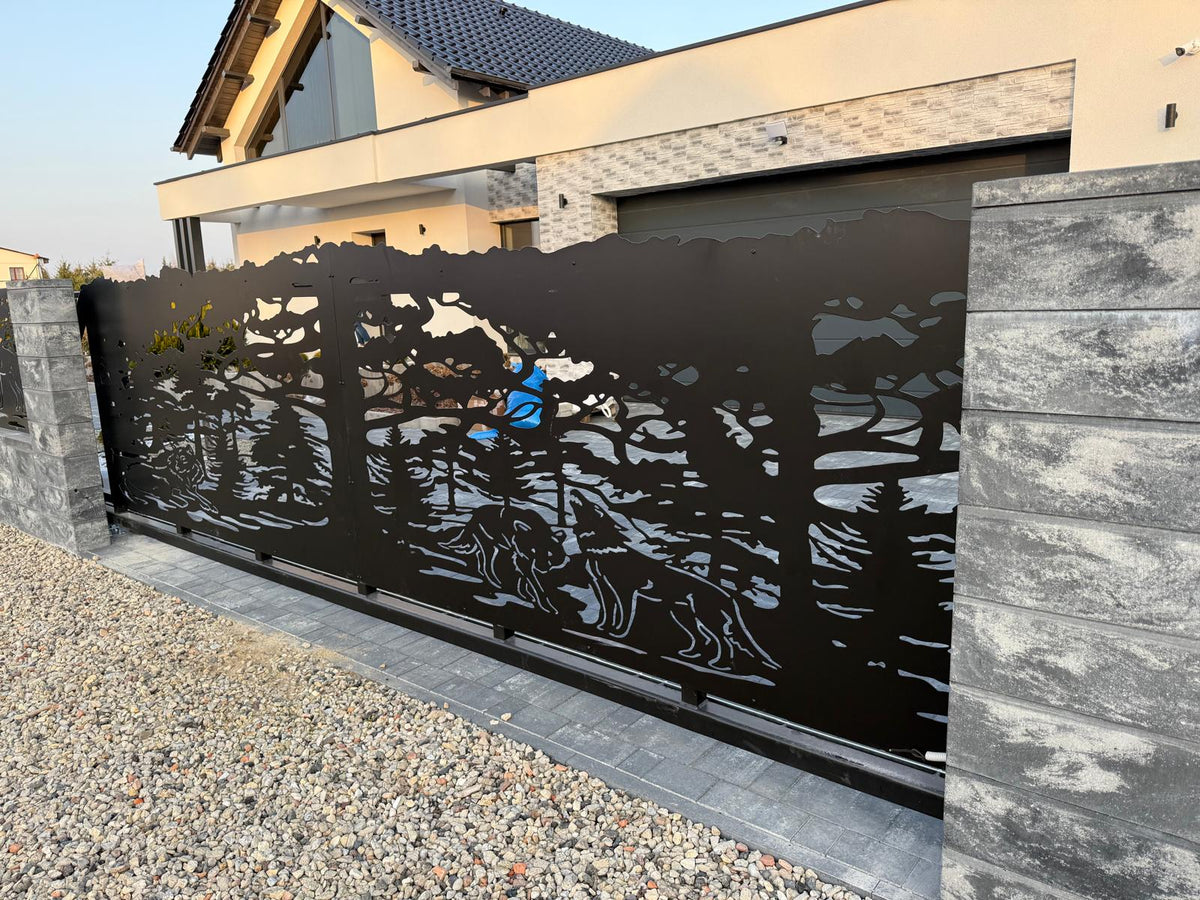
Sliding gates move horizontally along a track — either a cantilevered system (no ground track, ideal for uneven terrain) or a wheeled system that runs on a fixed rail set into the driveway. As the gate opens, it slides parallel to the fence line rather than swinging into or out of the property.
Space-Saving Benefits
This is where sliding gates truly shine. Because they don't require an arc of open space to operate, they're the go-to choice for sloped driveways, tight urban lots, or properties where the driveway meets the street at an angle. They also allow you to park close to the gate line without obstructing its movement.
Tail Space Requirements
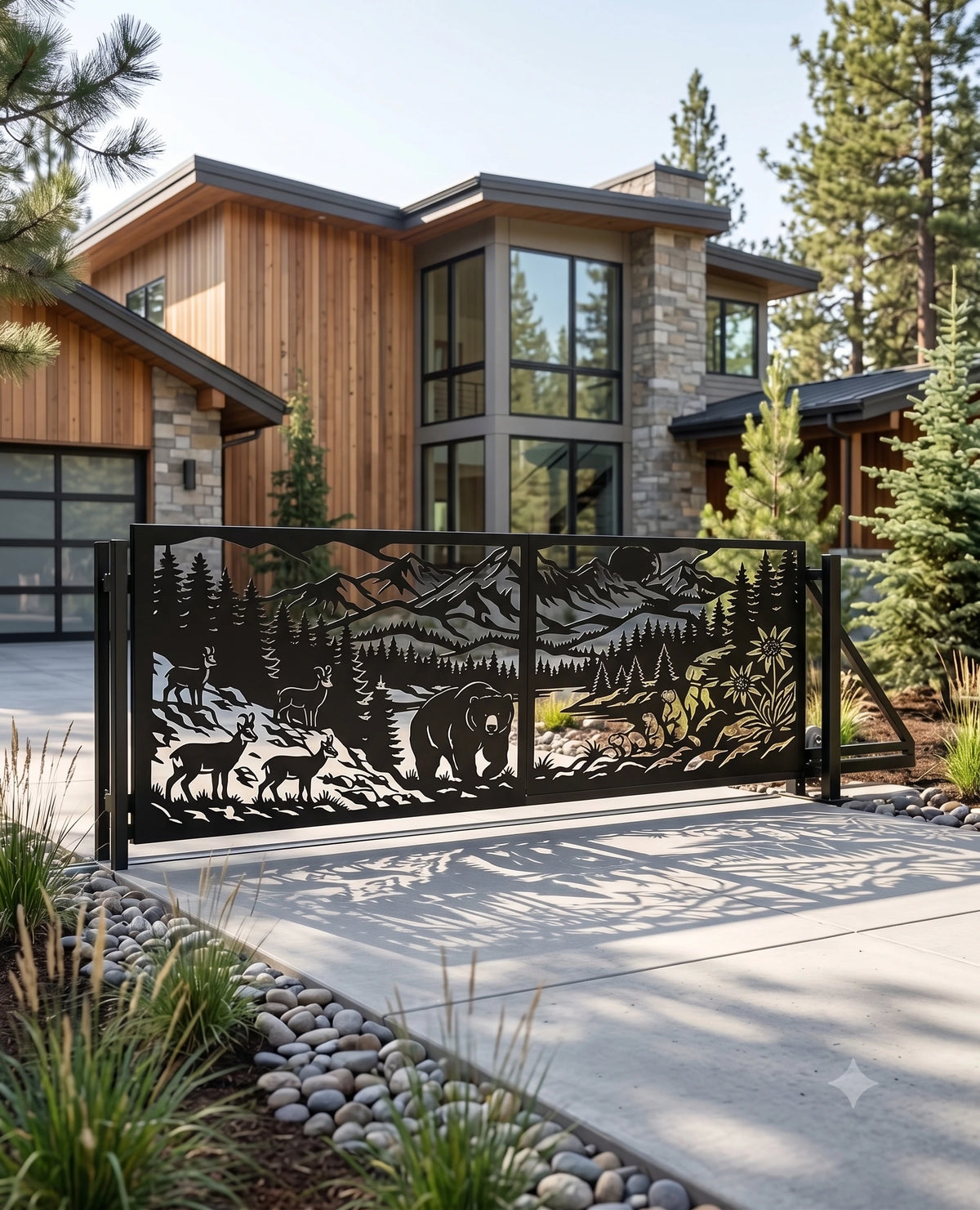
The trade-off is "tail space" — the length of fence line beside the driveway opening where the gate slides into when open. As a rule of thumb, you'll need clear run-back space roughly equal to the gate's width (cantilever systems typically require slightly more, since the track and counterbalance rollers extend beyond the gate itself). If your property doesn't have this side clearance, a sliding gate may not be feasible without redesigning the fence layout.
Comparison Table: Swing Gates vs. Sliding Gates
| Feature | Swing Gate | Sliding Gate |
|---|---|---|
| Space Needed | Requires clear arc space in front of and/or behind the gate | Requires side "tail" space along the fence line |
| Driveway Length | Best for flat, moderate-length driveways with setback room | Works well on short, sloped, or steep driveways |
| Wind Resistance | More exposed to wind load on open panels; can strain hinges/automation in high winds | Lower wind resistance issues thanks to horizontal, track-supported movement |
| Automation | Automated via hydraulic or articulated arms; simpler installation | Automated via motor and rack-and-pinion or chain-drive systems; smoother for heavy gates |
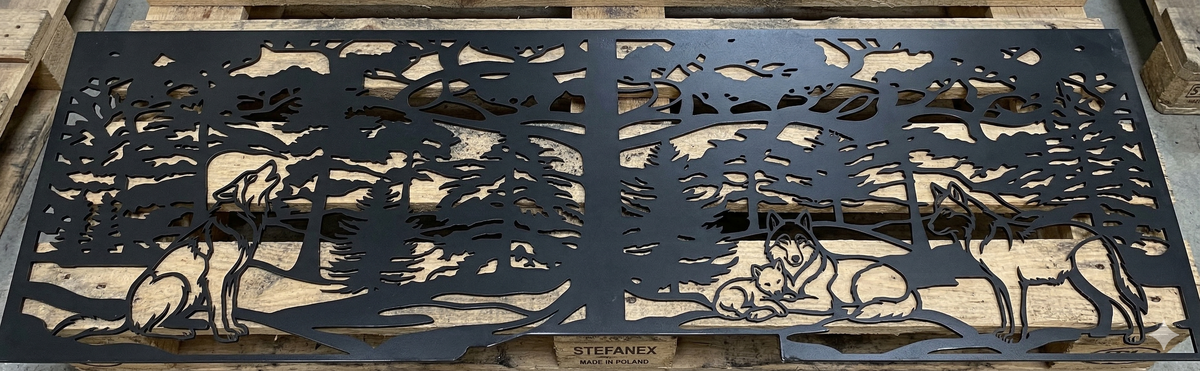
Whichever style you choose, the design of the panel itself is what truly transforms a functional gate into a standout architectural feature. Modern, intricate laser-cut metal designs — like the collections available at cutcraftdxf.com — work beautifully in both swing and sliding configurations, adding depth, shadow play, and a custom, high-end look that elevates your property's curb appeal far beyond a standard flat panel gate.
Conclusion: Which Gate Is Right for Your Property?
There's no universal "better" option — the right choice comes down to your property's layout. If you have a flat, level driveway with enough setback space and you're drawn to a classic, symmetrical look, a swing gate is likely your best fit. If your driveway is sloped, short, or space is tight near the street, a sliding gate will almost always be the more practical and reliable solution. Whatever you choose, investing in a well-designed DXF pattern ensures your gate isn't just practical — it's a statement piece.